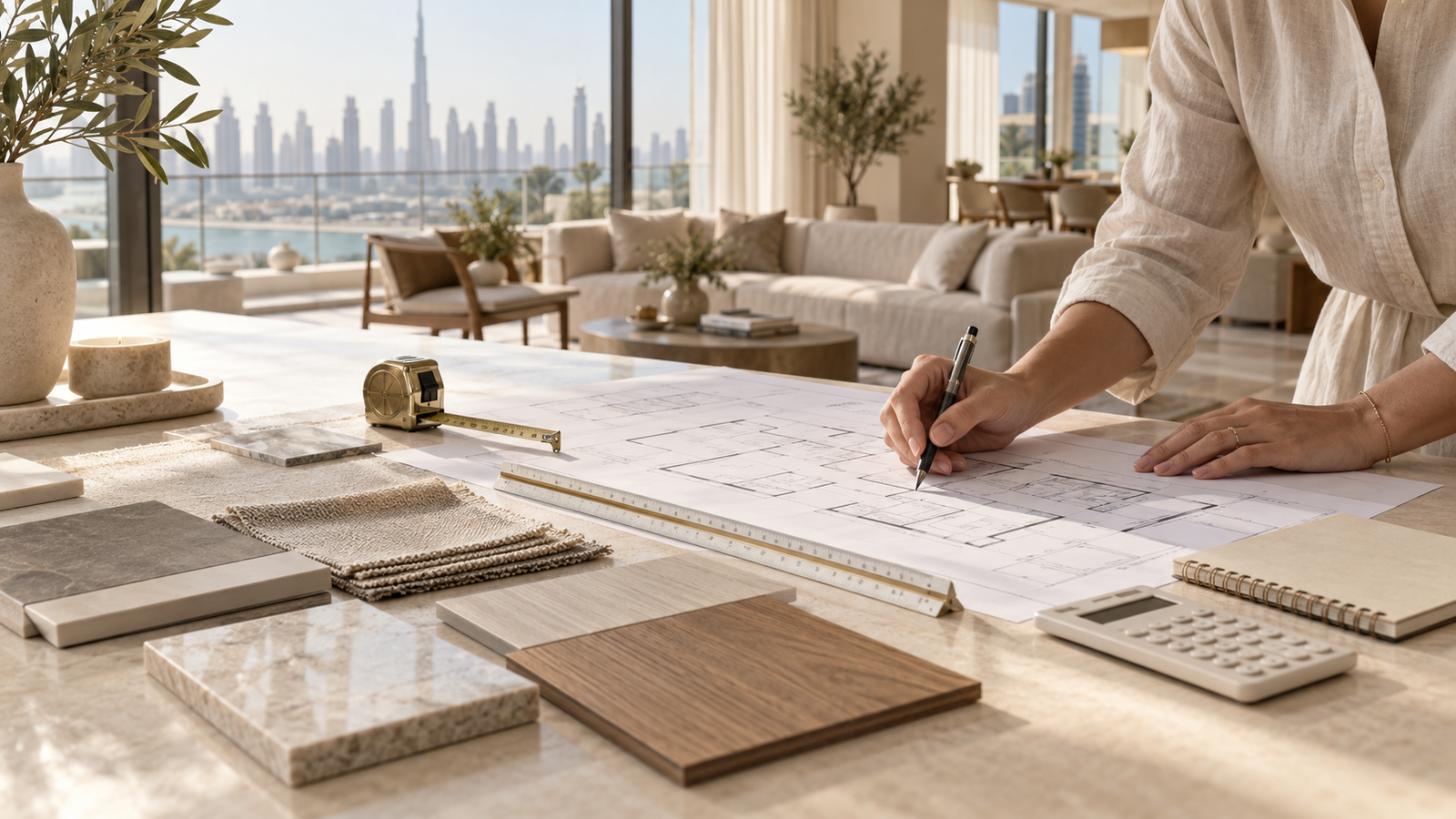
A successful apartment renovation begins long before demolition starts. The most expensive problems often come from decisions being made too late after drawings are issued, materials are ordered or work has already begun.
Before renovating your Dubai apartment, clarify these seven points. They will help your designer prepare a more accurate proposal, protect the budget and create a home that genuinely supports the way you live.
1. How should the apartment support your daily life?
Start with function rather than finishes. Consider how many people live in the property, whether anyone works from home, how often you entertain and which areas currently feel uncomfortable or inefficient.
Think about storage, privacy, circulation, lighting and the activities each room must support. A beautiful concept will only succeed when it responds to your real routines.
2. What is included in the renovation?
Define whether the project is a decorative refresh, a partial renovation or a complete transformation. Repainting and furnishing are very different from changing layouts, kitchens, bathrooms, ceilings, flooring, lighting and built-in joinery.
A clear scope allows your designer and contractor to prepare drawings, quotations and timelines around the same expectations. It also reduces the risk of important work being discovered after construction begins.
3. What is your working budget?
Your budget should account for more than visible finishes and furniture. Depending on the scope, it may also need to cover design fees, approvals, demolition, mechanical and electrical work, plumbing, joinery, lighting, appliances, installation and final styling.
Keep a contingency for concealed conditions or necessary changes that only become visible during the work. Being transparent about the available budget helps the design team prioritise correctly and recommend suitable materials from the beginning.
4. Is the layout fully resolved?
Confirm the layout before selecting decorative finishes. The position of walls, doors, sanitary fixtures, kitchen equipment, furniture and storage affects almost every later decision.
Clear circulation and correct furniture dimensions are especially important in apartments where every square metre matters. Resolving these relationships early prevents attractive selections from being forced into an unsuitable plan.
5. What must be planned before finishes are selected?
Lighting, electrical points, air-conditioning details, plumbing and built-in storage should be coordinated with the layout. These elements influence ceiling designs, wall finishes, cabinetry and furniture placement.
For example, deciding on a media wall without confirming sockets and equipment locations can lead to visible cables or expensive changes. Early technical coordination creates a cleaner and more considered result.
6. What permissions and building requirements apply?
Renovation requirements vary according to the building, property and proposed scope. Before work begins, confirm the applicable approval process, working-hour restrictions, access procedures, contractor documentation and rules for deliveries or waste removal with the relevant building management.
Allow time for these requirements in the programme. Starting procurement or booking site teams before approvals are clear can create unnecessary delays.
7. Who will make the final decisions?
Agree who will approve the layout, materials, quotations and any changes during the project. If several people are involved, establish how feedback will be consolidated before instructions are issued.
Also identify any fixed dates, such as a tenancy ending, handover, move-in or planned travel. A realistic programme should include design development, approvals, procurement, construction, installation and snagging—not only the days spent on site.
Before the design process begins
Prepare your floor plan, property photographs, inspiration images, preferred scope, approximate budget and target completion date. Include a short list of what is not working in the existing apartment and what you most want the renovation to improve.
This information gives your designer a stronger starting point and helps the first consultation focus on meaningful decisions.
A clear brief creates a better renovation
The earlier the priorities are defined, the easier it becomes to balance design, cost and timing. A considered brief does not limit creativity—it gives the project the structure needed to develop with clarity.
If you are planning a Dubai apartment renovation, contact Likhara Interior to discuss your property, priorities and anticipated timeline.